



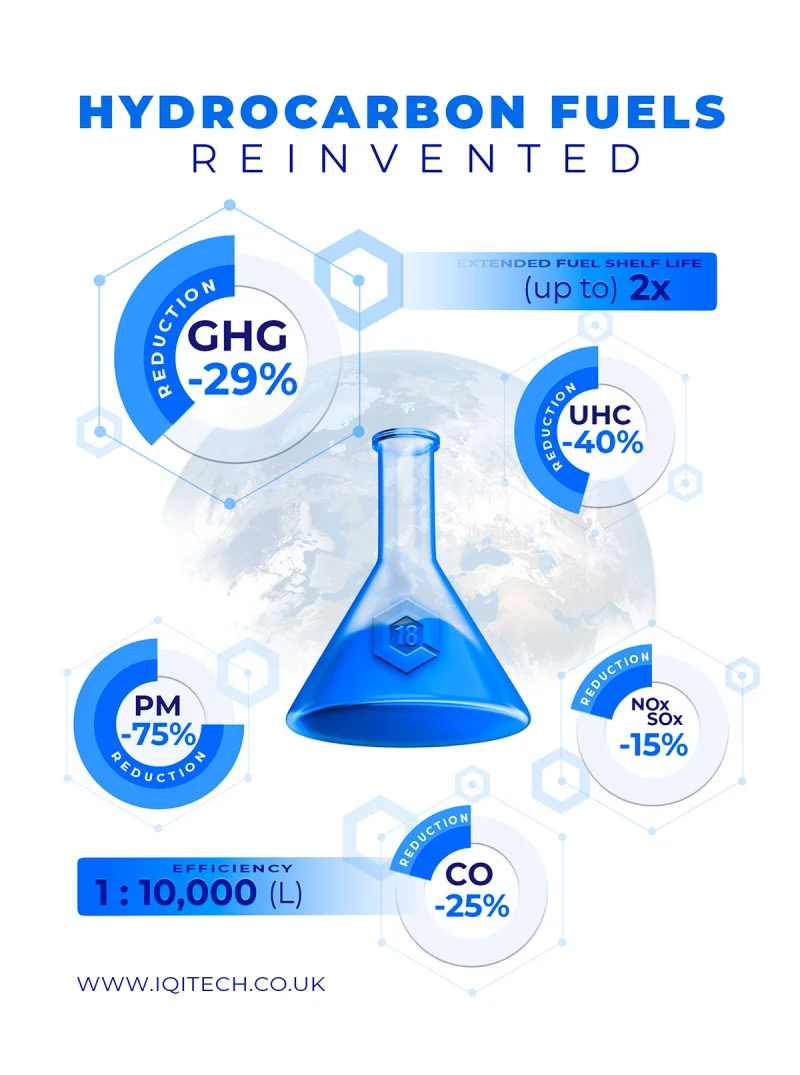
The greatest achievement in the development of this invention for its creators was the successful integration of advanced catalytic technology into the fuel combustion process. They specifically managed to enhance the efficiency of fuel combustion and reduce emissions of harmful pollutants to an extent that previous researchers had not achieved. Their innovation significantly improved the fuel’s burn rate, leading to lower levels of unburned hydrocarbons and particulate matter, and thus exceeded the performance of existing technologies. This advancement represents a major breakthrough in achieving more sustainable and cleaner fuel usage.
Challenge:
The main challenge was to create a component that, through the enhancement of hydrocarbon fuel combustion processes, reduces emissions of particulate matter and other toxic exhaust components while simultaneously extending engine lifespan, which is particularly important for health and the environment.
Innovation:
The inventors achieved a breakthrough in scientific research by developing a multifunctional modifier for diesel fuel (B7, B100), heating oil (both light and heavy), fuel oil, and marine fuels, which improves the combustion process of all fractions and thus significantly reduces harmful substance emissions. The achieved formula is particularly effective for fuels containing methyl esters of higher fatty acids (FAME), which are a component of biodiesel.
Breakthrough Achievements:
The scientists managed to achieve synergy among the additive components, resulting in a significant reduction in particulate matter emissions (up to 77% for B100 fuel) and other toxic exhaust components, while maintaining the fuel’s lubricating and low-temperature properties.
Competitive Advantage:
The component according to this patent shows clearly better performance compared to other solutions, such as classical detergents or other commercial products containing iron compounds, as confirmed by conducted studies and tests.
Recent Comments